🌎 AI's Energy Requirements: IEA Forecasts
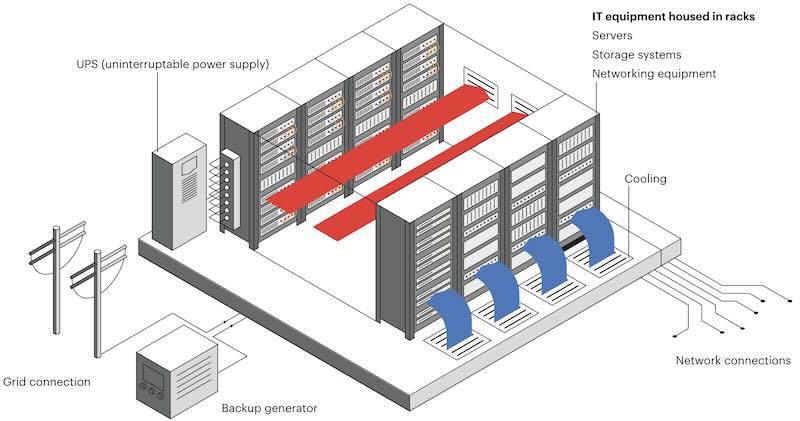
"Artificial intelligence (AI) model training and deployment occur mainly in data centres. Understanding the role of data centres as actors in the energy system first requires an understanding of their component parts. Data centres are facilities used to house servers, storage systems, networking equipment and associated components that are installed in racks and organised into rows."
🇺🇸 IAEA: AI Energy Demand and Supply
🌎 International Atomic Energy Agency: AI Energy Demand
"In recent years, artificial intelligence (AI) has soared to the top of the political and business agenda. Once a mostly academic pursuit, it has evolved into an industry with trillions of dollars at stake. Despite significant uncertainties, it is now very clear: AI is coming. In many sectors, it is already here.
This has major consequences for the global energy sector. There is no AI without energy – specifically electricity.
At the same time, AI has the potential to transform the sector’s future.
However, policy makers and the market have often lacked the tools to fully understand these wide-ranging impacts."
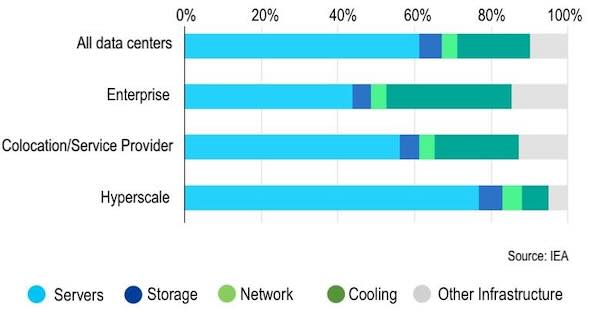
🔺 ["Energy and AI", International Energy Agency]
🇺🇸 Meeting AI's Energy Requirements
🇺🇸 AI Data Centers and Power Demand Growth
The following table lists the number of data centers in USA's top 20 states serviced by American Electric Power (2017)
| State | Data Centers | State | Data Centers |
|---|---|---|---|
| New York | 666 | Colorado | 76 |
| California | 584 | Massachusetts | 70 |
| Texas | 329 | Ohio | 64 |
| Florida | 228 | Arizona | 63 |
| Washington | 207 | Oregon | 60 |
| Virginia | 178 | Michigan | 50 |
| Georgia | 156 | Indiana | 41 |
| Pennsylvania | 121 | Wisconsin | 39 |
| Illinois | 121 | North Carolina | 37 |
| New Jersey | 101 | Kansas | 33 |
🔺 Source: GeoTel Communications: US Data Centers, 2017
"Data centres account for around one-tenth of global electricity demand growth to 2030, less than the share from industrial motors, air conditioning in homes and offices, or electric vehicles. However, the significance of data centres in driving electricity demand differs by country. Emerging and developing economies are already experiencing rapid electricity demand growth. In these countries, data centres account for around 5% of the increase in electricity demand to 2030.
Advanced economies, on the other hand, have seen several decades of essentially stagnant electricity demand. In this group of countries, data centres account for more than 20% of demand growth to 2030, presenting a wake-up call on the need to put the electricity sector on a growth footing again."
International Energy Agency (IEA): "Energy and AI" December 2024
Power Generation Capacity
ChatGPT has provided a structured, realistic estimate of the power generation capacity required to support U.S. AI-focused data centers over the next 5 years (to ~2030) and the next 10 years (to ~2035) — plus key initiatives underway to meet that demand.
Current State (2024–2025)
U.S. data centers consumed about 180–185 terawatt-hours (TWh) in 2024 (≈4–4.4% of total U.S. electricity use). AI workloads are a growing share of that.
National electricity demand is hitting record highs, partly due to data centers driving load growth.
Growth Trends
Data center electricity use in the U.S. is projected to double X1.7–3X by the late 2020s (e.g., 2023→2028).
AI is the primary driver of this surge, with hyperscale computing and new AI training workloads pushing energy needs much higher.
🇺🇸 Estimated Power Capacity Needs (next 5 & 10 years)
❗️🇺🇸 Now: PJM Interconnection LLC is seeking new power supplies to address potential electricity shortages stemming from the boom in artificial intelligence.
- PJM would match proposed data centers with new power plants from Sep 2026 through Mar 2027, and will ask for interest in participating in bilateral negotiations lin mid-April 2026.
- PJM is bracing for a supply shortage in the summer of 2027, and may pursue a second-phase process if the initiative fails to attract enough new supply. [Bloomberg: 11 Apr 2026]
NextEra Energy will buy Dominion Energy in an all-stock transaction [⏯️ Reuters: 22 May 2026]
Next 5 Years (to ~2030)
Total incremental power generation capacity needed (U.S., cumulative): ~47 GW
This is the additional supply utilities must add above existing capacity to support expected data center growth (AI + cloud + storage).
Translates to electricity consumption:
- If ~47 GW of new capacity runs ~60% capacity factor → ≈ 247 TWh/year additional generation (very rough conversion, acknowledging grid losses and seasonal variation).
Population of data center demand by 2030:
- U.S. data center electricity use could rise from ~180 TWh (2024) to ~426 TWh (2030) — a ~133% rise (quadrupling AI share).
- Data centers may then make up 6–9% of total U.S. generation by 2030.
Interpretation: AI and data centers collectively will drive a large chunk of US electricity growth through 2030. To keep the grid reliable, roughly 47 GW of incremental generation capacity (gas + renewables) is likely needed — plus grid upgrades and storage.
Next 10 Years (to ~2035)
Estimates vary widely, but scaled projections indicate dramatic growth:
- Deloitte projects AI data center power demand could grow from ~4 GW in 2024 to ~123 GW by 2035 if AI load becomes dominant.
- That aligns with other projections that show 30× growth in AI-specific load over 10+ years.
Implication:
Even assuming conservative utilization, total installed capacity serving AI data centers alone could approach 100+ GW by the mid-2030s — requiring hundreds of terawatt-hours/year of generation and robust transmission infrastructure.
Note: These long-range figures have more uncertainty because of efficiency improvements, AI optimization, hardware evolution, and national energy policies.
Energy Storage
Softbank has said it plans to make large scale batteries for AI data storage. [Bloomberg 11 May 2026]
🇺🇸 How the U.S. Is Responding: Major Initiatives
A. Generation & Infrastructure Buildout
Utility-level capacity expansion
Georgia approved ~10,000 MW (10 GW) additional generation mainly for data center demand — one of the biggest single generation expansions in U.S. history.
Federal and regional grid operators (e.g, PJM Energy, which manages North America's largest grid, serving all or parts of Delaware, Illinois, Indiana, Kentucky, Maryland, Michigan, New Jersey, North Carolina, Ohio, Pennsylvania, Tennessee, Virginia, West Virginia and the District of Columbia). PJM is not publicly listed.
Grid operators are revising planning frameworks to accommodate fast-growing AI loads and avoid shortfalls. More: Electric Power Markets
Utility grid planning includes:
- Fast-track interconnections
- Demand management and curtailment agreements
- Prioritizing reliability while meeting AI demand spikes
B. Renewables & Clean Energy Projects
The U.S. Department of Energy (DOE) supports a portfolio approach, boosting renewables (wind, solar) and complementary technologies (storage, grid modernization).
Many tech companies are signing direct renewable power purchase agreements (PPAs) to ensure long-term clean supply. Renewable power price initiatives in the USA are primarily driven by the Inflation Reduction Act (IRA) of 2022, which provides major tax credits for wind, solar, and storage, alongside state-level policies like net metering (in 34 states) and feed-in tariffs (in CA, NY, IN, WA). These initiatives, coupled with falling battery storage costs (down 89% since 2010), have made new renewables more cost-effective than fossil fuels. [International Renewable Energy Agency (IRENA): 22 Jul 2025]
Major U.S. Electricity Sources (2023 Data):
- Natural Gas (~43%): The primary source of U.S. electricity, utilized in both conventional steam and high-efficiency gas turbine power plants.
- Renewables (~21%):
- Wind (10.2%): The largest source of renewable generation.
- Hydropower (5.7%): Conventional hydroelectric dams.
- Solar (3.9%): Primarily utility-scale photovoltaic (PV), experiencing rapid growth.
- Biomass & Geothermal (<2%): Smaller, consistent renewable contributors.
- Nuclear (18.6%): A consistent, zero-emission base-load source.
- Coal (16.2%): Continued decline in share, but still a significant part of the baseload, often used in steam turbines.
- Petroleum (<1%): Used rarely, primarily in older or standby plants.
Investment Opportunities
Ranking the top 4 power generators:
- Ranking criteria:
- Exposure to wholesale pricing (can they raise prices?)
- Baseload reliability (AI needs 24/7 power)
- Proximity to demand growth (data centres, PJM, ERCOT, etc.)
- Regulatory constraints (caps vs free-market pricing)
- Ability to expand capacity
The top 4 ranked power generators:
- ✅ Constellation Energy [CEG] [Nuclear]: We are investors in this company: It has the largest nuclear fleet in USA, with true baseload
- Vistra Corp [VST] [Nuclear + Gas]
- Talen Energy [TLN] [Nuclear]
- NRG Energy [NRG] [Gas]
Nuclear Energy & Long-Term Baseload
- ✅ Google signed deals for 50+ MW nuclear capacity, with plans reaching ~500 MW by 2035, to power data centers.
- Interest in small modular reactors (SMRs) and advanced nuclear is growing — but most deployment isn’t expected until the 2030s.
Government & Stakeholder Initiatives
A White House task force (2024) brought together hyperscalers, utilities, and regulators to coordinate energy infrastructure planning and permit reform. It was led by the National Economic Council, National Security Council, and the White House Deputy Chief of Staff’s office, coordinates Federal policy across agencies to advance AI data center development in alignment with economic, national security, and environmental objectives. White House consideration of the Task Force Report: Oct 2024.
🇺🇸 Key Risks & Constraints
Grid bottlenecks & interconnection delays are slowing new data center hookups.
Regional supply shortfalls could constrain 40% of planned AI data centers by 2027 unless generation and grid upgrades speed up.
Environmental and cost pressures arise when fossil fuels are used to meet rapid demand spikes, complicating climate goals.
🇺🇸 Summary Estimates: Power Generation for U.S. AI Data Centers
| Timeframe | Estimated Incremental Capacity Needs | Notes |
|---|---|---|
| Next 5 years (~2030) | ~47 GW new generation | Enough for ~200–250 TWh/year + grid upgrades |
| Next 10+ years (~2035) | Potential ~100–123+ GW for AI alone | Bigger unknowns; driven by AI load growth |
| Data center share of U.S. power | ~6–9% by 2030 | Growth driven by AI demand |
🇺🇸 Bottom Line
- AI-driven electricity demand is a major driver of U.S. power growth for the next decade and beyond.
- Meeting that demand will require tens of gigawatts of new capacity (gas, renewables, nuclear) plus grid upgrades and smarter load management.
- Policy, private sector investment, and technological innovation are all critical to ensuring reliable, affordable, and lower-carbon power as AI scales.
Investment Opportunities: Key NASDAQ/NYSE listed power companies supporting AI
- ✅ Constellation Energy Corporation (NASDAQ: CEG): As the largest U.S. operator of nuclear power plants, Constellation is a major player in supplying carbon-free energy to tech giants like Microsoft and ✅ Meta. It operates a ~31,676 MW portfolio of nuclear, wind, solar, and hydro assets, supplying electricity and natural gas to commercial, industrial, and residential customers. In early Feb 2026 Constellation's Calpine unit announced a new 380MW agreement with data center operator Cyrus-One to power a planned facility next to the Freestone Energy Center in Texas, with an exclusive option for an additional 380 MW in a second phase.[CEG Earnings Report: 2025]
- Talen Energy Corporation (NASDAQ: TLN): Talen has secured 20-year power purchase agreements with major tech companies (specifically ✅ Amazon) to supply nuclear power directly to AI data centers. News
- Fluence Energy, Inc. (NASDAQ: FLNC): A company that provides grid-scale battery systems, crucial for storing renewable energy and ensuring reliable, constant power for data centers. News: Australia
- American Electric Power Company, Inc.(NASDAQ: AEP): Identified as a key player in the AI-driven energy sector.
- Oklo Inc.(NYSE: OKLO): Oklo is closely associated with AI-driven energy and often categorized with NASDAQ tech-energy trends): Focused on next-gen small modular reactors, with significant backing from OpenAI's Sam Altman.
✅ We are investors in these companies
News
- 10 Jan 2026: 🇺🇸 ✅ Constellation Energy to buy Calpine in blockbuster $16.4 billion US power deal [Reuters]
- 16 Jan 2026: 🇺🇸 Trump Wants Big Tech to Pay for Power [Bloomberg]
- 19 Jan 2026: ✅ Nvidia Corp. supplier Micron Technology Inc. said an ongoing memory chip shortage has accelerated over the past quarter and reiterated that the crunch will last beyond this year due to a surge in demand for high-end semiconductors required for AI infrastructure.[Bloomberg 19 Jan 2026]
- 10 Feb 2026: 🇺🇸 ✅ Constellation Energy unit inks new 380 MW deal with CyrusOne Inc [CONE] [Reuters]
- 18 Mar 2026: 🇺🇸 ✅ Constellation Announces Agreement to Sell PJM Generation Assets to LS Power as Part of FERC, U.S. DOJ Resolution of Calpine Transaction [Constellation]
✅ We are investors in these companies
🇦🇺 Australian Power Generation and Distribution
Updates
10 Jun 2026: "Transgrid CEO Brett Redman says data centres must pay their fair share to expand the grid to avoid the cost falling unfairly on individual consumers, amid mounting worries about the financial burden of the energy transition."
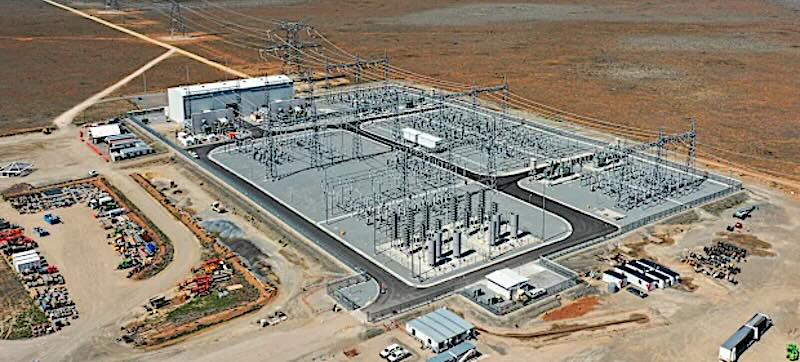
🔺 Dinawan Energy Connect substation (Riverina/Murrumbidgee Area of NSW)
6 May 2026: "AGL Energy says the market is sharply underestimating demand for power from data centres and risking a supply crunch amid the soaring needs of big technology companies and artificial intelligence developers. AGL CEO Damien Nicks said significantly more had to be spent on wind-power generation to meet that demand, which he flagged would be far higher than forecast." [AFR 6 May 2026]
CDC Data Centres Pty Ltd has announced a deal with an undisclosed technology giant that it said was worth “tens of billions” of dollars over its three-decade lifespan. The CDC deal was for 555 megawatts, equivalent to about 40% of the country’s data centre capacity used in the 12 months to 31 Dec 2025.
Drivers of Demand
Hyperscale data centres in Sydney and Melbourne typically require:
- 20–100 MW per facility
- Some campus requirements exceed 200 MW
The ASX lists 117 energy companies (as at March 2026). Most of them are involved in distribution.
AFR reports "Anthropic has committed to paying for new power generation and upgrading local energy grids if it builds data centres in Australia, after announcing it will open a Sydney office later this year. Evan Frondorf, Anthropic’s head of external partnerships and policy, told a Senate committee the company would take the same approach to its global data centre rollout, including in the United States.
Anthropic’s Managing Director of International, Chris Ciauri, said the company’s initial focus would be working with its enterprise, start-up and research customers, such as Canva, Quantium and Commonwealth Bank. The company said in a statement it would start by paying for space in other data centres, but that would quickly change. Australia will become its fourth office in the Asia-Pacific, after Tokyo, Bengaluru and Seoul." [AFR 12 Mar 2026][Anthropic News]
The largest generators are scheduled in the following table. Note the difference between USA's use of cleaner fuel and Australia's use of brown coal:
| Generator | Capacity | Fuel | State | Operator |
|---|---|---|---|---|
| Loy Yang A & Loy Yang B | ~3,280 MW | Brown Coal | Victoria | Transgrid & AusNet |
| Eraring | ~2,880 MW | Bituminous Coal | NSW | Origin Energy [ASX.ORG]: Transgrid |
| Yallourn | 1,480 MW | Brown Coal | Victoria | Transgrid |
| Mount Piper | ~ 1,430 MW | Coal | NSW | Transgrid |
| Delta Power and Energy (Vales Point Ltd): Vales Point B | 1,320 MW | Coal | NSW, Victoria | Transgrid |
ASIC sues Delta Power and Energy for alleged futures market and financial benchmark manipulation [ASIC: 30 Jun 2025]
Australian data centres could be forced to power their operations with entirely new renewable energy sources under national rules being developed by State and Federal energy ministers designed to protect electricity consumers from rising grid costs. The proposals being drafted by the Australian Energy Market Commission would require data centres to “fully offset” all of their power requirements using renewable energy – in addition to that already being used in the grid. The changes were proposed at a meeting of energy ministers and senior regulators on 8 May 2026 and will be designed to practically implement the more high-level “expectations” of data centres released by Australia's Federal Minister for Industry and Innovation in Mar 2026.[AFR: 11 May 2026]
"AirTrunk and global renewable energy operator European Energy Australia are supporting the development of ✅ Google’s first Australian renewable energy project to power the data centres underpinning its artificial intelligence and cloud computing. It is almost ready to connect to the national grid, in an important step towards easing concerns that the facilities will be a drain on energy resources."
[AFR: 1 Jun 2026] European Energy's 58MW Mokoan Solar Farm, part of the Australian Government’s Capacity Investment Scheme, was completed in Nov 2024. [European Energy: 29 Dec 2024]
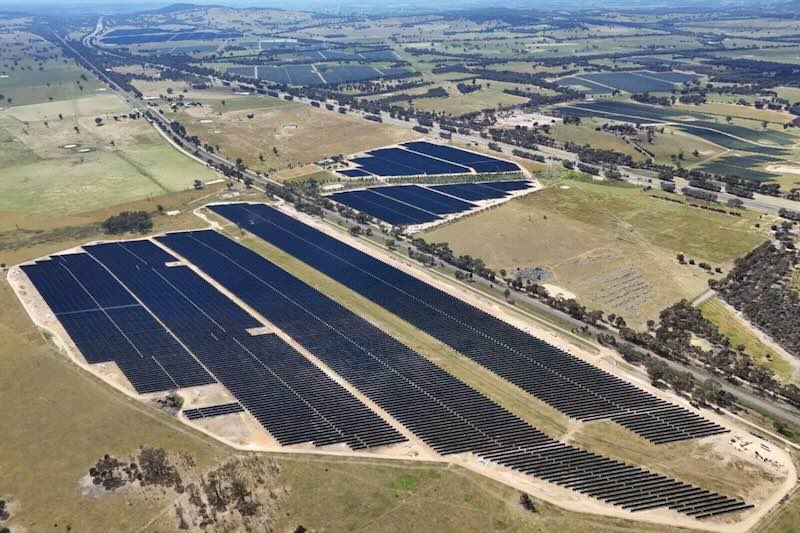
🔺 58MW Mokoan Solar Farm in Winton, Victoria
✅ Google’s first Australian renewable energy project to power the data centres underpinning its artificial intelligence and cloud computing is almost ready to connect to the national grid, in an important step towards easing concerns that the facilities will be a drain on energy resources.
Solar Energy Farm at Mulwala, NSW
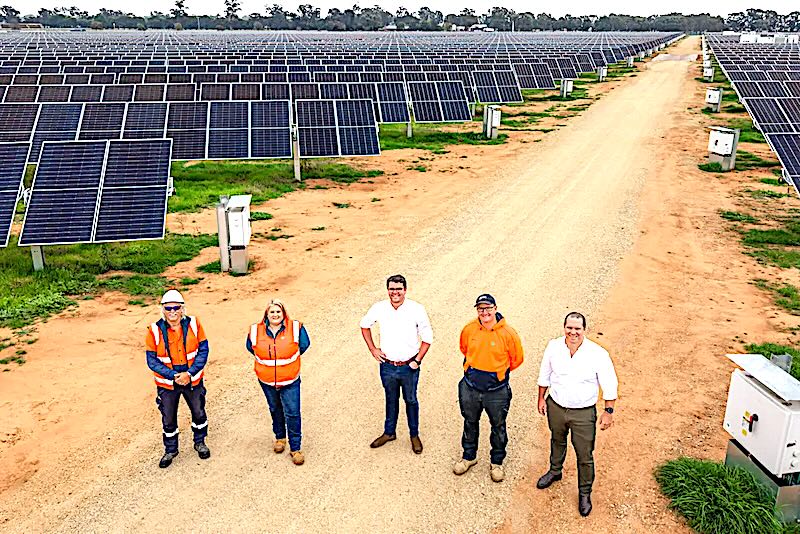
🔺 25MW Mulwala Solar Farm in Winton, Victoria
The 25-megawatt solar farm in Mulwala, in the Riverina district of NSW, has been constructed in partnership with Australian data centre operator AirTrunk and global renewable energy operator European Energy Australia. [AFR 1 Jun 2026]