Energy
News
✅ Constellation to Acquire Rhode Island State Energy Center (RISEC) From Shell
✅ Constellation has announced an agreement to acquire 100% of RISEC Holdings, LLC (RISEC), owner of the Rhode Island State Energy Center, from Shell Energy North America, for USD 715 million, subject to customary purchase price adjustments. Constellation is a Fortune 200 company headquartered in Baltimore, is the largest private-sector power producer in the world and the nation's largest producer of clean and reliable energy.
The Rhode Island State Energy Center (RISEC) is a combined-cycle electric generation facility, fueled by natural gas. The facility has two gas turbines and one steam turbine; combined-cycle design improves efficiency and reduces emissions compared to single-cycle plants. It is capable of generating up to 609 megawatts of electricity. The facility sells electricity and capacity into the competitive ISO New England wholesale power market and is expected to become part of Constellation's merchant generation portfolio.
The USD 715 million purchase price is equivalent to approximately USD 580 million net of expected first year tax benefits. The transaction is expected to be immediately accretive to Constellation's operating earnings, deliver returns above the company's 10% unlevered return threshold, and will not impact its ability to execute USD 5 billion of authorized share repurchases by the end of 2027. [Constellation Energy: 10 Sep 2026]
📰 Constellation Earnings Report: Q2/2026
Data Centers and their Energy Requirements
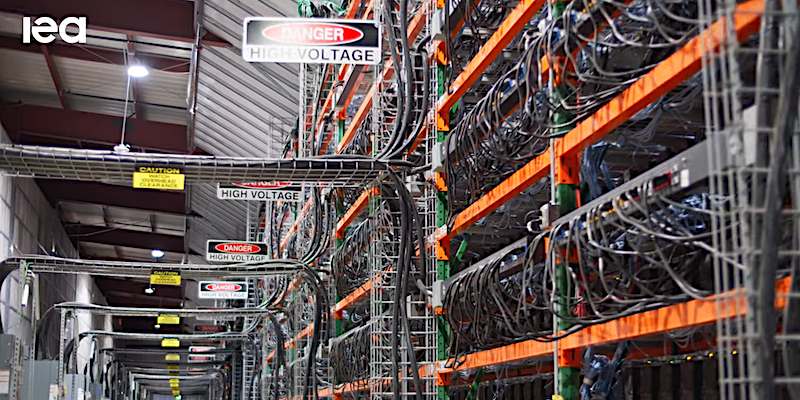
✅ Amazon’s chief executive has said that power is the single biggest constraint in its cloud and artificial-intelligence business. This means investors tracking hyperscalers’ AI race will also want to keep close tabs on how they plan to get their hands on more electricity.
Here, ✅ Amazon has an incumbent advantage. It is the world’s largest cloud provider and has been building a lot of data centers over the past two decades. Amazon’s operating, self-built data centers in the U.S. consume up to roughly 9GW of power, according to Aterio. That is comparable with the generation capacity of North Dakota." [WSJ: 24 Jun 2026]
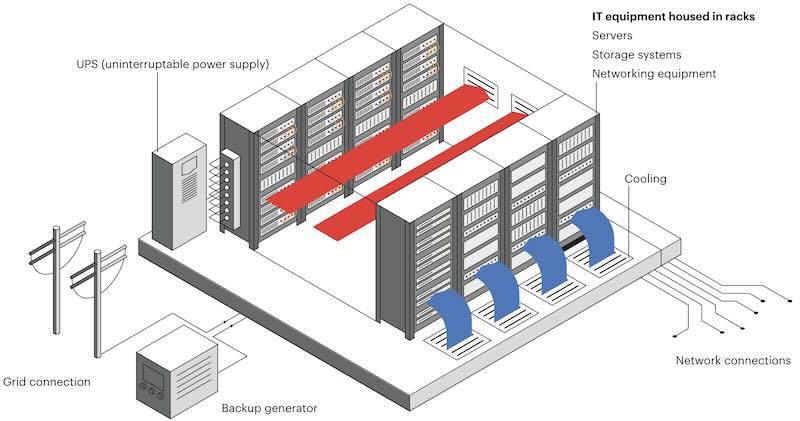
"In its simplest form, a data center is a physical facility that houses and runs large computer systems. U.S. data center annual energy use in 2023 (not accounting for cryptocurrency) was approximately 176 terawatt-hours (TWh), approximately 4.4% of U.S. annual electricity consumption that year, according to a report by Lawrence Berkeley National Laboratory. A data center typically contains multiple computer servers, data storage devices, and network equipment that can provide information technology (IT) infrastructure service for organizations to store, manage, process, and transmit large amounts of data. Some projections show that data center energy consumption could double or triple by 2028.
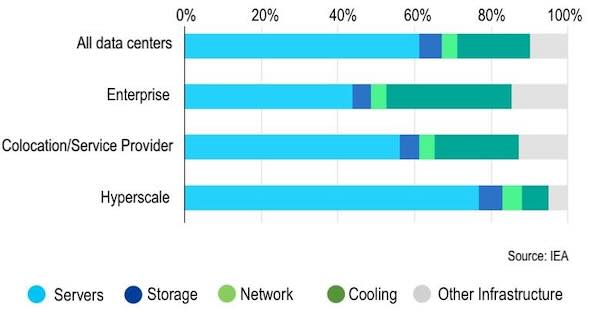
"Roughly one-half or greater of the electric power demand of data centers stems directly from the operation of electronic IT equipment. Much of the rest is for cooling. The operation of the IT equipment raises the temperature of the ambient room air, necessitating a cooling strategy.
Centralized cooling resources are of two types:
- those moving chilled air through large ductwork; or
- those moving chilled water in a piped cooling loop that exchanges heat with the environment.
"An alternative to these centralized systems is room-scale air conditioners. One type, called computer room air conditioners (CRACs), is common in smaller data centers. Exchanging the heat with the environment can happen faster with methods that directly consume water. The source of the water can be the local water utility and can also be on-site reservoirs or other colocated water resources.
A study by the International Energy Agency (IEA) estimates, for illustration, that a 100MW U.S. data center may consume roughly 2 million liters (roughly 530,000 gallons) per day, averaged across the various cooling strategies, with 725,000 liters (roughly 190,000 gallons) per day consumed on site, or a little less than 40%." [US Congressional Research Service: 12 May 2026]
🌎 AI's Energy Requirements: International Energy Agency (IEA) Forecasts
"Artificial intelligence (AI) model training and deployment occur mainly in data centers. Understanding the role of data centers as actors in the energy system first requires an understanding of their component parts."
🇺🇸 IEA: Energy Demand and Supply
Reports
IEA: ⏯️ We Mapped Every Data Center on Earth
IEA World Energy Outlook 2025 [PDF: 12 Dec 2025]
North America [IEA: 12 Nov 2025]
Australia [IEA: 12 Nov 2025]
Demand Volatility
in a documented case in 2025, a single data center's power demand jumped by 400% in a quarter of a second during an AI training run, faster than a gas turbine can physically respond. [IAEA]
🌎 International Energy Agency (IEA): AI Energy Demand
"In recent years, artificial intelligence (AI) has soared to the top of the political and business agenda. Once a mostly academic pursuit, it has evolved into an industry with trillions of dollars at stake. Despite significant uncertainties, it is now very clear: AI is coming. In many sectors, it is already here.
This has major consequences for the global energy sector. There is no AI without energy – specifically electricity.
At the same time, AI has the potential to transform the sector’s future.
However, policy makers and the market have often lacked the tools to fully understand these wide-ranging impacts."
🇺🇸 Meeting AI's Energy Requirements
Power Usage Effectiveness (PUE) of data centers is currently the dominant industry metric, but operators are now evaluating performance based on how much useful computing—such as data processing units known as AI tokens, or mathematical calculations known as floating point operations (FLOPS)—is delivered per watt.
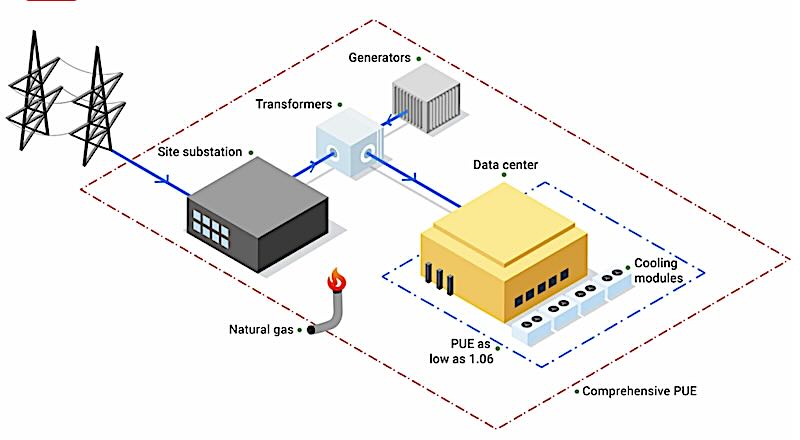
Some data centers are exploring using direct current (DC) rather than alternating current (AC) to cut conversion losses. Swiss power technology group ABB created a demonstration site in Zurich operating entirely on DC which increased energy efficiency by 10% while reducing installation costs by 20% and lowering investment costs for electrical components by 15%. [ABB: 30 May 2012][Reuters: 18 Aug 2025]
🇺🇸 AI Data Centers and Power Demand Growth
The following table lists the number of data centers in USA's top 20 states serviced by American Electric Power (2017)
| State | Data Centers | State | Data Centers |
|---|---|---|---|
| New York | 666 | Colorado | 76 |
| California | 584 | Massachusetts | 70 |
| Texas | 329 | Ohio | 64 |
| Florida | 228 | Arizona | 63 |
| Washington | 207 | Oregon | 60 |
| Virginia | 178 | Michigan | 50 |
| Georgia | 156 | Indiana | 41 |
| Pennsylvania | 121 | Wisconsin | 39 |
| Illinois | 121 | North Carolina | 37 |
| New Jersey | 101 | Kansas | 33 |
🔺 Source: GeoTel Communications: US Data Centers, 2017
"Data centers account for around one-tenth of global electricity demand growth to 2030, less than the share from industrial motors, air conditioning in homes and offices, or electric vehicles. However, the significance of data centers in driving electricity demand differs by country. Emerging and developing economies are already experiencing rapid electricity demand growth. In these countries, data centers account for around 5% of the increase in electricity demand to 2030.
Advanced economies, on the other hand, have seen several decades of essentially stagnant electricity demand. In this group of countries, data centers account for more than 20% of demand growth to 2030, presenting a wake-up call on the need to put the electricity sector on a growth footing again."
International Energy Agency (IEA): "Energy and AI" December 2024
Power Generation Capacity
ChatGPT has provided a structured, realistic estimate of the power generation capacity required to support U.S. AI-focused data centers over the next 5 years (to ~2030) and the next 10 years (to ~2035) — plus key initiatives underway to meet that demand.
Current State (2024–2025)
U.S. data centers consumed about 180–185 terawatt-hours (TWh) in 2024 (≈4–4.4% of total U.S. electricity use). AI workloads are a growing share of that.
National electricity demand is hitting record highs, partly due to data centers driving load growth.
Growth Trends
Data center electricity use in the U.S. is projected to double X1.7–3X by the late 2020s (e.g., 2023→2028).
AI is the primary driver of this surge, with hyperscale computing and new AI training workloads pushing energy needs much higher.
🇺🇸 Estimated Power Capacity Needs (next 5 & 10 years)
❗️🇺🇸 Now: PJM Interconnection LLC is seeking new power supplies to address potential electricity shortages stemming from the boom in artificial intelligence.
- PJM would match proposed data centers with new power plants from Sep 2026 through Mar 2027, and will ask for interest in participating in bilateral negotiations lin mid-April 2026.
- PJM is bracing for a supply shortage in the summer of 2027, and may pursue a second-phase process if the initiative fails to attract enough new supply. [Bloomberg: 11 Apr 2026]
NextEra Energy will buy Dominion Energy in an all-stock transaction [⏯️ Reuters: 22 May 2026]
Next 5 Years (to ~2030)
Total incremental power generation capacity needed (U.S., cumulative): ~47 GW
This is the additional supply utilities must add above existing capacity to support expected data center growth (AI + cloud + storage).
Translates to electricity consumption:
- If ~47 GW of new capacity runs ~60% capacity factor → ≈ 247 TWh/year additional generation (very rough conversion, acknowledging grid losses and seasonal variation).
Population of data center demand by 2030:
- U.S. data center electricity use could rise from ~180 TWh (2024) to ~426 TWh (2030) — a ~133% rise (quadrupling AI share).
- Data centers may then make up 6–9% of total U.S. generation by 2030.
Interpretation: AI and data centers collectively will drive a large chunk of US electricity growth through 2030. To keep the grid reliable, roughly 47 GW of incremental generation capacity (gas + renewables) is likely needed — plus grid upgrades and storage.
Next 10 Years (to ~2035)
Estimates vary widely, but scaled projections indicate dramatic growth:
- Deloitte projects AI data center power demand could grow from ~4 GW in 2024 to ~123 GW by 2035 if AI load becomes dominant.
- That aligns with other projections that show 30× growth in AI-specific load over 10+ years.
Implication:
Even assuming conservative utilization, total installed capacity serving AI data centers alone could approach 100+ GW by the mid-2030s — requiring hundreds of terawatt-hours/year of generation and robust transmission infrastructure.
Note: These long-range figures have more uncertainty because of efficiency improvements, AI optimization, hardware evolution, and national energy policies.
Grid CAPEX Forecast
Grid capex is set to surpass USD 650 billion in 2026 — double the level seen in 2020. Yet the equipment for these projects is still running 2-3 years behind schedule in some markets. [RystadEnergy: 28 May 2026]
Planned Growth: USA
The U.S. Department of Energy (DOE) has announced the first projects selected under the Genesis Mission Request for Applications (RFA) as part of its USD 293 million Genesis program intended to tackle USA’s most complex science and technology challenges [DOE Genesis Program Announcement]. [DOE RFA Announcement: 17 Mar 2026]
"The U.S. Department of Energy (DOE), alongside the U.S. Department of Commerce (DOC), today announced a unique public-private partnership with SoftBank and AEP Ohio to redevelop DOE land, modernize energy infrastructure, and develop advanced computing in Southern Ohio. As part of the partnership, SB Energy, a SoftBank Group company, is planning to build 10 gigawatts (GW) of new power generation—including 9.2 GW of natural gas generation—that will connect to the local grid and provide power to a new 10 GW data center development at the Portsmouth Site in Pike County, Ohio at no cost to American families. These collective efforts will deliver lower electricity costs across the region, create thousands of American jobs, and strengthen America’s national security." DOE 20 Mar 2026]
The U.S. Department of Energy is backing ✅ Constellation Energy Group's Plan to launch its Crane Clean Energy Center is now backed by a $1 billion U.S. Department of Energy (DOE) loan. This marks the first time the DOE Loan Programs Office has concurrently finalized a conditional loan commitment and financial close, made possible by Constellation's strong balance sheet and credit worthiness. Funded by the Energy Dominance Financing Program, this interest-bearing loan will lower Constellation's cost of financing and leverage private investment to restore reliable nuclear energy to the grid and help America win the AI race.
✅ Constellation Energy Group earned the No. 1 spot on Barron's annual "Most Sustainable U.S. Companies" rankings, which evaluate the country's 1,000 largest publicly traded companies on 230 performance indicators including environmental impact, workforce development and community support. This year's recognition marks the third time in as many years that Constellation has secured a spot in the top 10 of Barron's annual rankings. Constellation debuted on the list in 2024 as No. 9 and moved up to No. 5 in 2025.
In addition to being the largest clean energy producer in USA, Constellation's generation portfolio also boasts the lowest carbon emissions rate among USA's 20 largest privately- or investor- owned power producers. Constellation also set company records for philanthropy and volunteerism in 2025, including USD 24.5 million in total giving and nearly 130,000 employee volunteer hours.
Planned Growth: Europe
Proxima Fusion has announced a EUR 411 million (USD 468 million) financing round, bringing the company’s valuation to EUR 2.4 billion (USD 2.7 billion) and establishing Proxima as the best-funded fusion company in Europe.
The round was led by XTX Ventures and East X Ventures, with RWE and ✅ Google as strategic investors
KfW Capital, SPRIN-D and Burda Principal Investments joined the round alongside returning investors including Plural, UVC Partners, Balderton, Cherry Ventures, DST Global Partners, Brevan Howard Macro Venture, Lightspeed, DTCF, redalpine, Leitmotif, Elaia, CDP Venture Capital, Bayern Kapital, and the EIC Fund.
German energy company RWE became an investor just months after signing an agreement with Proxima to partner on building the first stellarator fusion power plant on the site of a former nuclear fission power plant in Gundremmingen, Bavaria.
✅ Google's investment underscores continued interest in fusion as a potential source of abundant, carbon-free, firm energy over the long-term.
One of the largest private investments in European technology this year - and the largest ever in European fusion - the round reflects growing recognition of fusion power as a strategic technology for energy security, economic resilience and industrial competitiveness.
The financing provides the backing needed to build Alpha, Proxima’s net-energy stellarator demonstrator near Munich, Germany. Alpha is the critical bridge between decades of fusion research and commercial deployment. Led by Proxima in partnership with the State of Bavaria, the Max Planck Institute for Plasma Physics and RWE, the project will validate key technologies and accelerate the development of the world's first fusion power plant later that decade. “Europe is racing with the United States and China to get to the first fusion power plant. Proxima's financing demonstrates that Europe can not only invent breakthrough technologies, but also build globally competitive companies around them. Investors recognise both the urgency and the opportunity of what we're doing and are backing us to develop a generational energy technology company," said Dr. Francesco Sciortino, Co-Founder and CEO of Proxima Fusion - Munich, Oxford, Zurich: 7 Jul 2026
Total life-cycle emissions for ✅ META's Hyperion plants could range from 4 million to over 10 million tonnes of CO2 each year, depending on how frequently the plants are put in use and the final efficiency benchmarks once built. On the high end, that’s as much CO2 as produced by over 2 million passenger cars. Fortunately, not all of META’s data centers take the same approach to power. ✅ META has announced a plan to power Prometheus with nuclear energy provided by energy companies Vistra, TerraPower and Oklo.[IEEE] [CNBC: 9 Jan 2026]
✅ NVIDIA, Fervo Energy, and Pacific Northwest National Laboratory (PNNL) are partnering to co-develop EGS-Twin, an AI-powered digital twin for geothermal energy systems. [Yahoo Finance: 23 Jun 2026]
🇺🇸 IAEA: AI Energy Demand and Supply
🌎 International Energy Agency (IEA): AI Energy Demand
Storage
🇯🇵 Softbank has said it plans to make large scale batteries for AI data storage. [Bloomberg 11 May 2026]
🇺🇸 How USA Is Responding: Major Initiatives
A. Generation & Infrastructure Buildout
Increased Production of Generators
Generac Power Systems [NYSE: GNRC] is spending USD 250 million by the end of 2027 to equip multiple factories to make beefed-up versions of its generators for data centers. The order backlog for those machines already stands at USD 1.6 billion, and Generac expects to add about 1,000 workers, a 10% increase in its headcount. [Reuters: 19 Aug 2026]
DOE Loan Program: ✅ Constellation Energy
"The U.S. Department of Energy (DOE) (has) released the finalized Fusion Science and Technology (FS&T) Roadmap, a national strategy to accelerate the development and commercialization of fusion energy on the most rapid, responsible timeline in history. Building on earlier roadmap efforts, the finalized roadmap brings together fusion science, technology, infrastructure, workforce development, and commercialization priorities into a single national strategy to support fusion pilot plants and commercial fusion power in the mid-2030s."
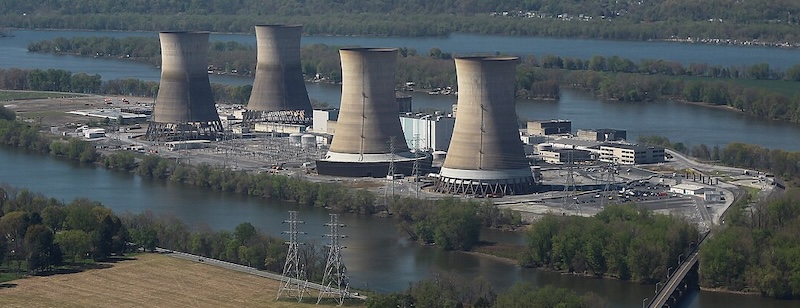
🔺 Three Mile Island 835 Megawatt Nuclear Generating Station
"In November 2025, DOE's Office of Energy Dominance Financing [EDF] closed a $1 billion loan to ✅ Constellation Energy Generation, LLC (Constellation) to help finance the Crane Clean Energy Center (Crane) Restart project, the Three Mile Island nuclear power plant on an island in the Susquehanna River in Londonderry Township, Pennsylvania.
The loan will partially finance the restart of the 835-megawatt (MW) reactor that was shut down for decommissioning in 2019, subject to U.S. Nuclear Regulatory Commission licensing approvals. The Crane Restart project is the first combined conditional loan commitment and financial close DOE’s Office of Energy Dominance Financing has pursued due to the strength of ✅ Constellation as a borrower. The loan is backed by the full credit and balance sheet of ✅ Constellation. [DOE: 9 Jun 2026] [EDF Project Statement]
Utility-level capacity expansion
Georgia approved ~10,000 MW (10 GW) additional generation mainly for data center demand — one of the biggest single generation expansions in U.S. history.
Federal and regional grid operators (e.g, PJM Energy, which manages North America's largest grid, serving all or parts of Delaware, Illinois, Indiana, Kentucky, Maryland, Michigan, New Jersey, North Carolina, Ohio, Pennsylvania, Tennessee, Virginia, West Virginia and the District of Columbia). PJM is not publicly listed.
Grid operators are revising planning frameworks to accommodate fast-growing AI loads and avoid shortfalls. More: Electric Power Markets
Utility grid planning includes:
- Fast-track interconnections
- Demand management and curtailment agreements
- Prioritizing reliability while meeting AI demand spikes
B. Renewables & Clean Energy Projects
The U.S. Department of Energy (DOE) supports a portfolio approach, boosting renewables (wind, solar) and complementary technologies (storage, grid modernization).
Many tech companies are signing direct renewable power purchase agreements (PPAs) to ensure long-term clean supply. Renewable power price initiatives in the USA are primarily driven by the Inflation Reduction Act (IRA) of 2022, which provides major tax credits for wind, solar, and storage, alongside state-level policies like net metering (in 34 states) and feed-in tariffs (in CA, NY, IN, WA). These initiatives, coupled with falling battery storage costs (down 89% since 2010), have made new renewables more cost-effective than fossil fuels. [International Renewable Energy Agency (IRENA): 22 Jul 2025]
Major U.S. Electricity Sources (2023 Data):
- Natural Gas (~43%): The primary source of U.S. electricity, utilized in both conventional steam and high-efficiency gas turbine power plants.
- Renewables (~21%):
- Wind (10.2%): The largest source of renewable generation.
- Hydropower (5.7%): Conventional hydroelectric dams.
- Solar (3.9%): Primarily utility-scale photovoltaic (PV), experiencing rapid growth.
- Biomass & Geothermal (<2%): Smaller, consistent renewable contributors.
- Nuclear (18.6%): A consistent, zero-emission base-load source.
- Coal (16.2%): Continued decline in share, but still a significant part of the baseload, often used in steam turbines.
- Petroleum (<1%): Used rarely, primarily in older or standby plants.
Investment Opportunities
Ranking the top 4 power generators:
- Ranking criteria:
- Exposure to wholesale pricing (can they raise prices?)
- Baseload reliability (AI needs 24/7 power)
- Proximity to demand growth (data centers, PJM, ERCOT, etc.)
- Regulatory constraints (caps vs free-market pricing)
- Ability to expand capacity
🇺🇸 USA's top 4 ranked power generators:
- ✅ Constellation Energy [CEG] [Nuclear] has the largest nuclear fleet in USA, with true baseload. It has also received DOE loan funding to restart Three-Mile Island's nuclear fusion power station
- Vistra Corp [VST] [Nuclear + Gas]
- Talen Energy [TLN] [Nuclear]
- NRG Energy [NRG] [Gas]
Nuclear Energy & Long-Term Baseload
- ✅ Google signed deals for 50+ MW nuclear capacity, with plans reaching ~500 MW by 2035, to power data centers.
- Interest in small modular reactors (SMRs) and advanced nuclear is growing — but most deployment isn’t expected until the 2030s.
🇺🇸 Government & Stakeholder Initiatives
A White House task force (2024) brought together hyperscalers, utilities, and regulators to coordinate energy infrastructure planning and permit reform. It was led by the National Economic Council, National Security Council, and the White House Deputy Chief of Staff’s office, coordinates Federal policy across agencies to advance AI data center development in alignment with economic, national security, and environmental objectives. White House consideration of the Task Force Report: Oct 2024.
🇺🇸 Key Risks & Constraints
Grid bottlenecks & interconnection delays are slowing new data center hookups.
Regional supply shortfalls could constrain 40% of planned AI data centers by 2027 unless generation and grid upgrades speed up.
Environmental and cost pressures arise when fossil fuels are used to meet rapid demand spikes, complicating climate goals.
🇺🇸 Summary Estimates: Power Generation for U.S. AI Data Centers
| Timeframe | Estimated Incremental Capacity Needs | Notes |
|---|---|---|
| Next 5 years (~2030) | ~47 GW new generation | Enough for ~200–250 TWh/year + grid upgrades |
| Next 10+ years (~2035) | Potential ~100–123+ GW for AI alone | Bigger unknowns; driven by AI load growth |
| Data center share of U.S. power | ~6–9% by 2030 | Growth driven by AI demand |
🇺🇸 Bottom Line
- AI-driven electricity demand is a major driver of U.S. power growth for the next decade and beyond.
- Meeting that demand will require tens of gigawatts of new capacity (gas, renewables, nuclear) plus grid upgrades and smarter load management.
- Policy, private sector investment, and technological innovation are all critical to ensuring reliable, affordable, and lower-carbon power as AI scales.
Investment Opportunities: Key NASDAQ/NYSE listed power companies supporting AI
- ✅ Constellation Energy Corporation (NASDAQ: CEG): As the largest U.S. operator of nuclear power plants, Constellation is a major player in supplying carbon-free energy to tech giants like Microsoft and ✅ Meta. It operates a ~31.676 GW portfolio of nuclear, wind, solar, and hydro assets, supplying electricity and natural gas to commercial, industrial, and residential customers. In early Feb 2026 Constellation's Calpine unit announced a new 380MW agreement with data center operator Cyrus-One to power a planned facility next to the Freestone Energy Center in Texas, with an exclusive option for an additional 380 MW in a second phase.[CEG Earnings Report: 2025]
- Talen Energy Corporation (NASDAQ: TLN): Talen has secured 20-year power purchase agreements with major tech companies (specifically ✅ Amazon) to supply nuclear power directly to AI data centers. News
- Fluence Energy, Inc. (NASDAQ: FLNC): A company that provides grid-scale battery systems, crucial for storing renewable energy and ensuring reliable, constant power for data centers. News: 🇦🇺 Australia
- American Electric Power Company, Inc.(NASDAQ: AEP): Identified as a key player in the AI-driven energy sector.
- Oklo Inc.(NYSE: OKLO): Oklo is closely associated with AI-driven energy and often categorized with NASDAQ tech-energy trends): Focused on next-gen small modular reactors, with significant backing from OpenAI's Sam Altman.
🇦🇺 Australia
Oxford Economics Australia presents the following forecasts based on a blended approach combining two independently constructed methodologies:
- "The Project Approach uses project-level data from AEMO, Network Service Providers (NSPs), and industry to estimate electricity consumption of known existing and prospective data centre developments.
- "The Economic Approach models the underlying demand for data centre services by sector, linking economic activity, technological adoption, and energy use.
"The Australian Energy Market Operator (AEMO) considered the expected energy demands of 225 known projects at various stages of development that want to hook up to the national electricity market, saying even with high uncertainty over how many proceed, it now expects a surge in power demand far larger than its estimates even a year ago.
"There are 165 data centres already in operation across the national electricity market, which covers all states and territories except Western Australia and the Northern Territory. Those data centres are consuming about 3 per cent of electricity supplied to the grid, but in just 10 years AEMO expects energy-hungry data centres to consume 13 per cent of power demand — even after accounting for the high cancellation rate of projects in the pipeline. That amounts to 34TWh (terawatt-hours) of electricity from the grid by 2036, almost as much as the 38TWh consumed by every home in NSW and Victoria today.
"Just a year ago, AEMO forecast that data centres would not consume that much power until some time after 2050, and even under its "accelerated transition" forecast, estimated data centres would consume about 24TWh by mid-2035.
"While the outlook is uncertain, particularly after 2030, AEMO has documented a data centre rush over the past 12 months, with the number of known data centres in development more than doubling since last year from 97 to 225." [ABC News 25 Aug 2026]
News
- 10 Jan 2026: 🇺🇸 ✅ Constellation Energy to buy Calpine in blockbuster USD 16.4 billion US power deal [Reuters]
- 16 Jan 2026: 🇺🇸 Trump Wants Big Tech to Pay for Power [Bloomberg]
- 19 Jan 2026: ✅ Nvidia Corp. supplier Micron Technology Inc. said an ongoing memory chip shortage has accelerated over the past quarter and reiterated that the crunch will last beyond this year due to a surge in demand for high-end semiconductors required for AI infrastructure.[Bloomberg 19 Jan 2026]
- 10 Feb 2026: 🇺🇸 ✅ Constellation Energy unit inks new 380 MW deal with CyrusOne Inc [CONE] [Reuters]
- 18 Mar 2026: 🇺🇸 ✅ Constellation Announces Agreement to Sell PJM Generation Assets to LS Power as Part of FERC, U.S. DOJ Resolution of Calpine Transaction [Constellation]
- ITER: International Thermonuclear Experimental Reactor is a massive international nuclear fusion project based in Saint-Paul-lès-Durance, France, southern France.
- The Goal of ITER is to recreate the natural power of the stars on Earth to generate clean, unlimited energy.
- The reactor uses hydrogen gas (the same fuel as the sun). It heats the hydrogen to incredibly high temperatures. The gas turns into plasma (a hot, glowing soup of charged particles).
- The Concept: Atoms slam together and fuse. This releases a massive amount of heat.
- The Megastructure: The machine relies on a giant magnetic cage, a tokamak: a doughnut-shaped machine that uses powerful magnets to trap superheated plasma.
- 17 Aug 2026: 🇦🇺 Data centres built in NSW will be pushed to source a minimum 40% of their electricity needs from more expensive wind power under a plan to kickstart struggling renewables projects and save government investment schemes from failure. [AFR: 17 Aug 2026]
🇦🇺 Australian Power Generation and Distribution
Updates
15 Jul 2026: In a speech at the University of Sydney, Prime Minister Albanese has said that Australian data centers will be required to minimise water use and fund their own power supply. Albanese confirmed he would seek State and Territory agreement for "clear, consistent and mandatory" data center Australian standards at a meeting of the national cabinet in Aug 2026. He said said new facilities would be required to underwrite new electricity generation and pay the full cost of connecting to the grid. Data center companies would have to contribute at least as much energy to the grid as they consumed, including both renewables and firming power. The government would also require the centers to minimise water use and pay for any additional water infrastructure where necessary. [ABC News: 15 Jul 2026] The Australian standards will largely target new data centers used for AI inference processing and model training, rather than every new facility. [AFR: 15 Jul 2026]
10 Jun 2026: "Transgrid CEO Brett Redman says data centers must pay their fair share to expand the grid to avoid the cost falling unfairly on individual consumers, amid mounting worries about the financial burden of the energy transition."
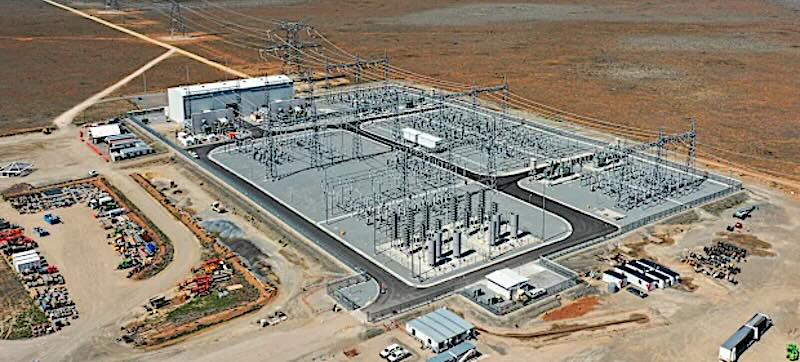
🔺 Dinawan Energy Connect substation (🇦🇺 Riverina/Murrumbidgee Area of NSW)
6 May 2026: "AGL Energy says the market is sharply underestimating demand for power from data centers and risking a supply crunch amid the soaring needs of big technology companies and artificial intelligence developers. AGL CEO Damien Nicks said significantly more had to be spent on wind-power generation to meet that demand, which he flagged would be far higher than forecast." [AFR 6 May 2026]
CDC Data Centres Pty Ltd has announced a deal with an undisclosed technology giant that it said was worth “tens of billions” of dollars over its 30 year lifespan. The CDC deal was for 555 megawatts, equivalent to about 40% of the country’s data center capacity used in the 12 months to 31 Dec 2025.
27 Mar 2026: NSW is fast-tracking 15 data centre projects worth AUD 52 billion even as it warns households could be slugged for electricity transmission upgrades to accommodate the huge growth in the voraciously power-hungry industry. The 15 data centre projects to win support from the IDA are mostly in western Sydney, including 4 in Blacktown and 2 each in Ryde, Penrith, Fairfield and the Hills Shire. ✅ NextDC will be supported for its S4, S5 and S7 data centres in Fairfield, Ryde and Eastern Creek. Stockland also won support for 3 projects. [AFR: 26 Mar 2026]
Drivers of Demand
Hyperscale data centers in Sydney and Melbourne typically require:
- 20–100 MW per facility
- Some campus requirements exceed 200 MW
The ASX lists 117 energy companies (as at March 2026). Most of them are involved in distribution.
AFR reports "Anthropic has committed to paying for new power generation and upgrading local energy grids if it builds data centers in Australia, after announcing it will open a Sydney office later this year.
Evan Frondorf, Anthropic’s head of external partnerships and policy, told a Senate committee the company would take the same approach to its global data center rollout, including in the United States.
Evan Frondorf is a Policy and Partnerships, Safeguards executive at Anthropic. His work at Anthropic focuses on the critical area of AI safety and responsible development, contributing to the company's mission of building safe and beneficial AI systems. [ZoomInfo]
Anthropic’s Managing Director of International, Chris Ciauri, said the company’s initial focus would be working with its enterprise, start-up and research customers, such as Canva, Quantium and Commonwealth Bank. Anthropic said in a statement it would start by paying for space in other data centers, but that would quickly change. [Anthropic News]. Australia will become its fourth office in the Asia-Pacific, after Tokyo, Bengaluru and Seoul." [AFR 12 Mar 2026]
The largest generators are scheduled in the following table. Note the difference between USA's use of cleaner fuel and Australia's use of brown coal:
| Generator | Capacity | Fuel | State | Operator |
|---|---|---|---|---|
| Loy Yang A & Loy Yang B | ~3,280 MW | Brown Coal | Victoria | Transgrid & AusNet |
| Eraring | ~2,880 MW | Bituminous Coal | NSW | Origin Energy [ASX.ORG]: Transgrid |
| Yallourn | 1,480 MW | Brown Coal | Victoria | Transgrid |
| Mount Piper | ~ 1,430 MW | Coal | NSW | Transgrid |
| Delta Power and Energy (Vales Point Ltd): Vales Point B | 1,320 MW | Coal | NSW, Victoria | Transgrid |
ASIC sues Delta Power and Energy for alleged futures market and financial benchmark manipulation [ASIC: 30 Jun 2025]
Australian data centers could be forced to power their operations with entirely new renewable energy sources under national rules being developed by State and Federal energy ministers designed to protect electricity consumers from rising grid costs. The proposals being drafted by the Australian Energy Market Commission would require data centers to “fully offset” all of their power requirements using renewable energy – in addition to that already being used in the grid. The changes were proposed at a meeting of energy ministers and senior regulators on 8 May 2026 and will be designed to practically implement the more high-level “expectations” of data centers released by Australia's Federal Minister for Industry and Innovation in Mar 2026.[AFR: 11 May 2026]
"AirTrunk and global renewable energy operator European Energy Australia are supporting the development of ✅ Google’s first Australian renewable energy project to power the data centers underpinning its artificial intelligence and cloud computing. It is almost ready to connect to the national grid, in an important step towards easing concerns that the facilities will be a drain on energy resources."
[AFR: 1 Jun 2026] European Energy's 58MW Mokoan Solar Farm, part of the Australian Government’s Capacity Investment Scheme, was completed in Nov 2024. [European Energy: 29 Dec 2024]
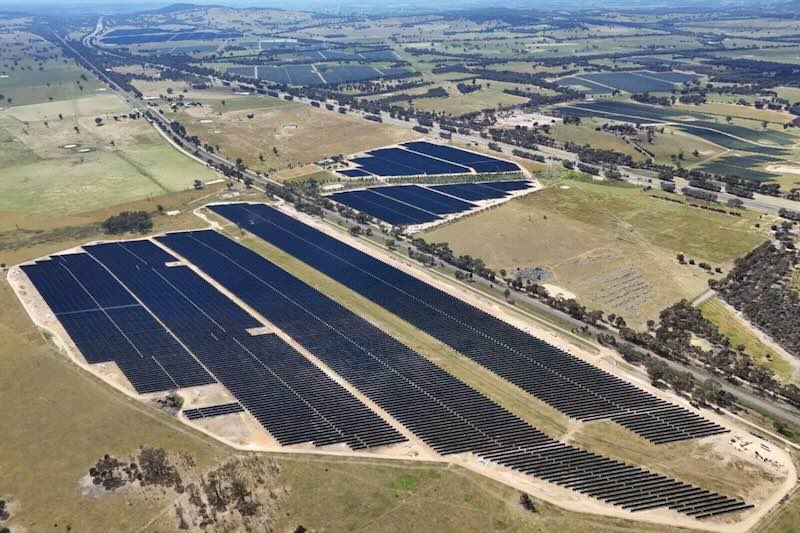
🔺 58MW Mokoan Solar Farm in Winton, Victoria
✅ Google’s first Australian renewable energy project to power the data centers underpinning its artificial intelligence and cloud computing is almost ready to connect to the national grid, in an important step towards easing concerns that the facilities will be a drain on energy resources.
Solar Energy Farm at Mulwala, NSW
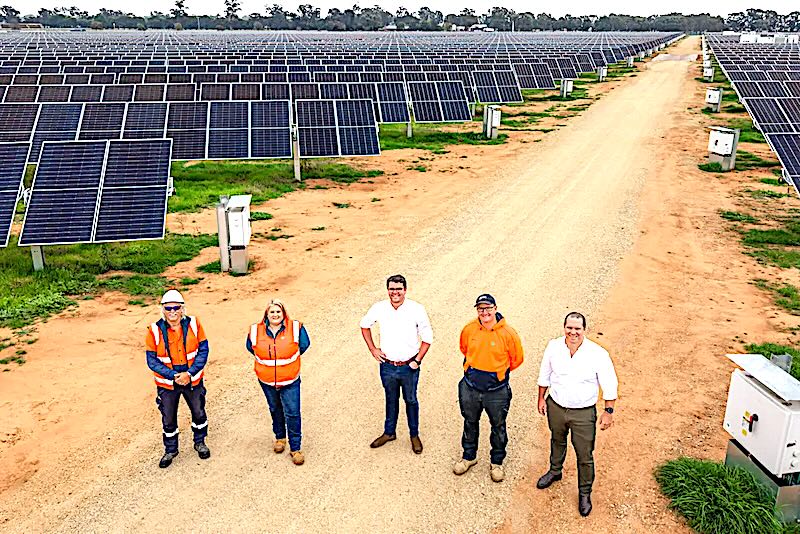
🔺 25MW Mulwala Solar Farm in Winton, Victoria
The 25-megawatt solar farm in Mulwala, in the Riverina district of NSW, has been constructed in partnership with Australian data center operator AirTrunk and global renewable energy operator European Energy Australia. [AFR 1 Jun 2026]
🌎 AI's Water Requirements: UNU INWEH Forecasts
The United Nations University Institute for Water, Environment and Health (UNUINWEH) has produced a report that estimates the global AI market is projected to grow from USD 189 billion in 2023 to nearly USD 5 trillion by 2033. This would represent roughly a 25-fold increase in global AI market size over a decade.
Implications:
- Global AI expenditure is projected to exceed USD 2.5 trillion in 2026.
- Generative AI accounted for over 20% of the global AI market in 2026, and is projected to reach 40% by 2030.
- Corporate AI investment exceeded USD 580 billion in 2025, while generative AI alone attracted nearly USD 34 billion in private investment.
- 78% of organizations reported using AI in their work in 2024, and 40% of employers expect to reduce their workforce where AI can automate tasks.
- About 60% of jobs in advanced economies incorporate AI, versus 26% in lowincome countries.
- Nearly half of the world’s data centers are in the United States. Only 16% of countries host AI-specialized cloud compute, and 90% of that capacity is concentrated in just 2 countries (the United States and China).